
Blog
Docs, AI, and shipping faster.
Playbooks and hard-earned lessons for teams who care about great documentation.

Documentation for enterprise sales: security docs, SSO guides, and compliance pages
Stalled enterprise deals often trace back to stale SSO guides and security pages. How to write and maintain the docs procurement actually reads.


Localizing documentation: when (and how) to translate your docs
A practical framework for deciding when to localize docs, machine translation vs. review, structuring content, and keeping translations in sync.


Writing error messages and troubleshooting docs users don't hate
Generic error codes create support tickets. Learn to write error messages and troubleshooting docs that tell developers what broke and how to fix it.


OpenAPI governance: catching broken specs before they break your docs
A valid OpenAPI spec can still be a bad one. Here's how to lint, validate, and version specs so broken contracts never reach your docs.


Writing a CONTRIBUTING.md that open source maintainers actually get used
Most CONTRIBUTING.md files are read once and ignored. Here's how to write one that reduces bad PRs and stays accurate as your workflow changes.


Documenting GraphQL APIs: what's different from REST
Your REST doc template breaks on GraphQL. Here's how to document schemas, queries, mutations, subscriptions, and the N+1 problem correctly.


How to document webhooks so integrators don't guess
Webhook docs are usually one happy-path payload and a shrug at security. Here is the anatomy of a webhook doc integrators actually trust.


How to document a CLI tool developers actually use
CLI docs fail when they copy the API-reference playbook. Here's the five-section structure, auto-generated reference, and real terminal examples that work.

Interactive API docs: why a "Try it" button converts better than a code block
Static curl blocks look correct and still fail on paste. See why live "Try it" panels convert better, and when to keep an endpoint static instead.

How to document your API's authentication so developers don't rage-quit
Auth is where API integrations die. How to document API keys, OAuth 2.0, and JWTs so developers get a working request, not a rage-quit.

GitBook vs Confluence: an honest comparison for technical teams in 2026
GitBook and Confluence are built for different jobs. A direct comparison on editor, search, versioning, pricing, and AI — and when to pick neither.

Documentation style guide: how to create one your whole team will actually follow
Most style guides are ignored within a week. Here is how to write one short enough to be looked up, enforced automatically, and actually adopted by your whole team.

Multi-product documentation: how to structure docs when you ship more than one product
One doc site works fine for one product. The moment you ship a second, you need a structure — or you get chaos. Here's what actually works.

How to document microservices: patterns that actually work at scale
Monolith docs scale badly. Microservices docs fail differently — fragmented, ownerless, constantly stale. Here are the patterns that actually hold up.
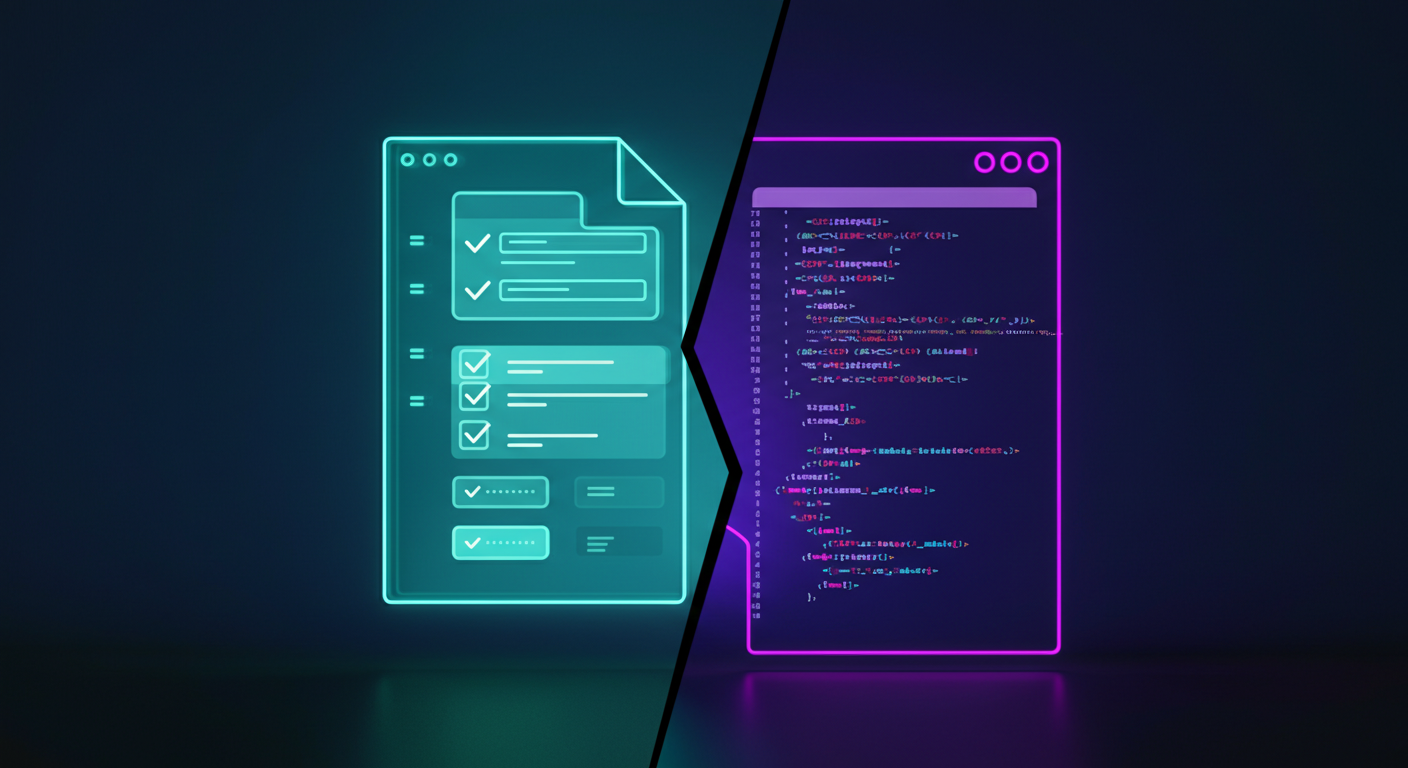
User documentation vs developer documentation: why the same approach breaks both
Treating user docs and developer docs as the same type of content creates two audiences that are both poorly served. Here is where the approaches diverge and how to structure for both.

Writing migration guides that don't break your users
Breaking changes are inevitable. Bad migration guides are not. How to write upgrade and migration docs that get developers from v1 to v2 without rage-quitting your product.

Writing docs for AI agents: your documentation is now the UI
Cursor, Claude, and Copilot read your docs more often than humans do. Here's what changes when AI agents are the primary consumer — and the five structural shifts that actually matter.

How to write a README developers will actually read
90% of READMEs fail in the first 10 seconds. Here's the 7-section structure, the most common mistake to fix, and how to keep your README in sync as the product evolves.

Technical writing trends in 2026: how the role is being redefined
The technical writer's role transformed more in 2025 than in the previous decade. Docs-as-code, AI-first drafting, embedded teams, documentation measured as a product metric — here's what changed and what the role demands now.

The State of Documentation in 2026: data, trends, and what actually works
AI now reads docs more than humans do. We analyzed the data: 53% of docs drive as many signups as marketing, auto-sync cuts rot by 40%, and more.

Shipping docs as a team: a workflow for engineers and writers
The "writers vs engineers" docs conflict is solvable. Here's how high-performing teams run documentation as a shared responsibility — without merge conflicts, bottlenecks, or blame.

SDK documentation best practices: how to document a client library
SDK docs are some of the worst-written documentation in the industry. A practical guide to documenting client libraries — from installation to error handling — with examples of what good looks like.

How to build product documentation that scales with your team
Your docs were designed for a 5-person team. Here's the architecture, ownership model, and automation layer you need to run them at 50.

How to optimize your docs for AI without breaking them for humans
AI agents now account for 41% of doc traffic. Here is what to change, what to leave alone, and how to serve both audiences at once.
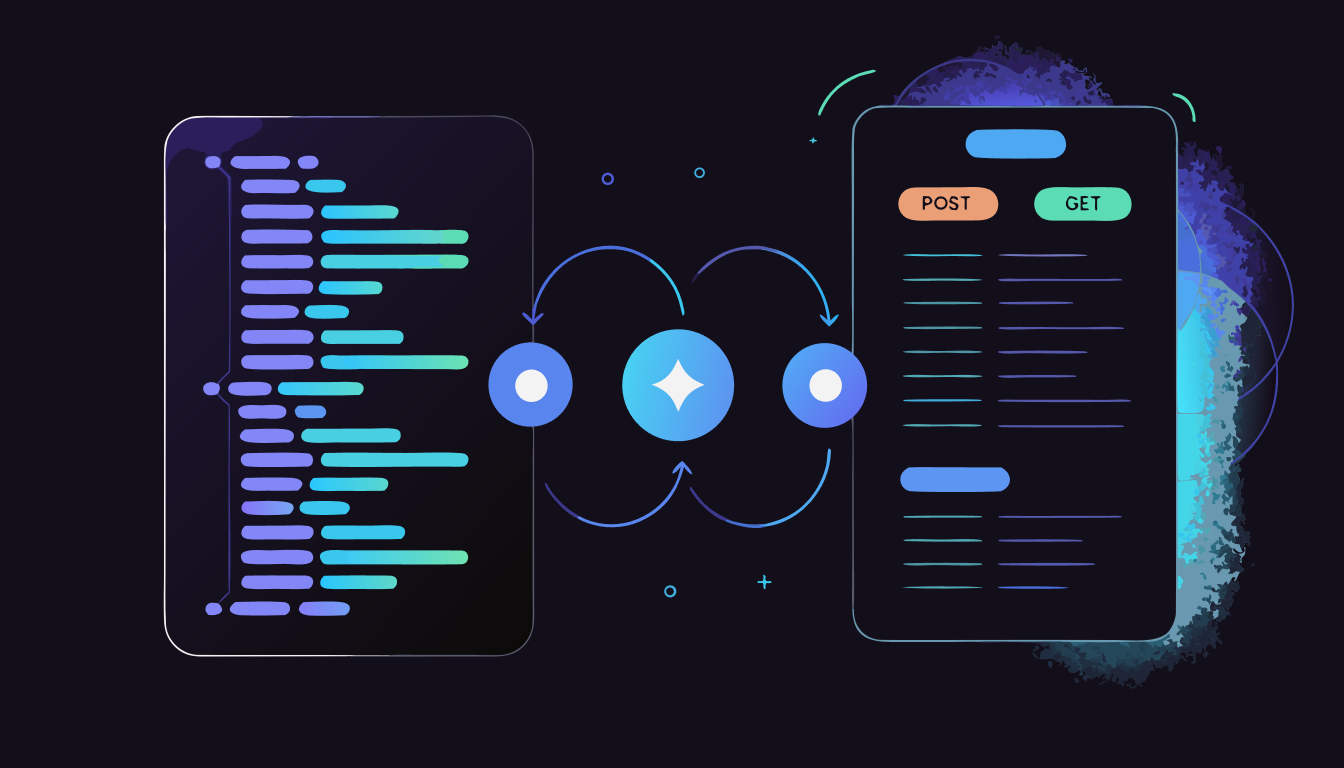
OpenAPI in 2026: auto-generated docs that stay in sync
Hand-written API reference docs drift from the code within weeks. Here's how to treat your OpenAPI spec as the single source of truth — and what to layer on top of it.

MCP for documentation: how Claude, Cursor & ChatGPT can read and edit your docs
Model Context Protocol turns your documentation into a tool AI agents can call directly. Here is what MCP actually does, why it matters for docs, and how to wire it up in five minutes.

llms.txt: the new standard for AI-readable documentation
Learn why llms.txt is becoming the standard for AI-readable documentation and how to implement it for your product.

Internal vs external documentation: why keeping them together is costing you
Mixing internal engineering docs with public-facing product docs in the same tool creates headaches for every team. When to separate them, when to keep them together, and what each system needs.

How to write a changelog developers actually read
Most changelogs are either too terse to be useful or too verbose to be read. A practical format for writing release notes that keep developers informed without losing them.

How to version your documentation (without losing your mind)
Most teams ignore docs versioning until they have three major versions live and no one knows which page is current. A practical system for versioning docs alongside your product.

How to stop your documentation from rotting: the case for auto-sync
Every team has stale docs. Every team feels guilty about it. The real fix is structural, not motivational — make the docs update themselves when the code changes.

How to measure if your documentation is actually working
"Good docs" is not a feeling — it is a measurable outcome. The metrics, signals, and analytics setups that tell you whether your documentation is helping or failing your users.

How AI coding assistants read your codebase — and why your README matters more than you think
Copilot, Cursor, and Windsurf don't just read your code — they read your README, your inline comments, and your CLAUDE.md. Here is how these tools consume your repo context, and how to optimize for them.

From repo to published docs in 5 minutes (an honest walkthrough)
The standard sales-deck claim is "auto-generate docs in seconds". Here is what actually happens when you point GitDoc at a real GitHub repo — timed, screenshot by screenshot, with the rough edges left in.

Documentation SEO: how to rank your API docs on Google
Most API docs are invisible to Google. A practical SEO framework for developer documentation — structured data, keyword strategy, and the content patterns that actually rank.

Documentation for startups: what to write first and what to skip
Most startups write the wrong docs at the wrong time. Here is the 3-document system that survives pivots — and the docs you should skip until you actually need them.

The documentation audit: a checklist for finding what's broken before your users do
Every six months, your docs accumulate broken links, outdated screenshots, and pages that answer questions nobody asks anymore. A systematic audit process to find and fix what's broken.

Documentation as a growth channel: turning docs into top-of-funnel
For developer-first SaaS, docs aren't a support cost — they're the biggest underused acquisition channel. Here's how high-growth devtools turn documentation into a pipeline.
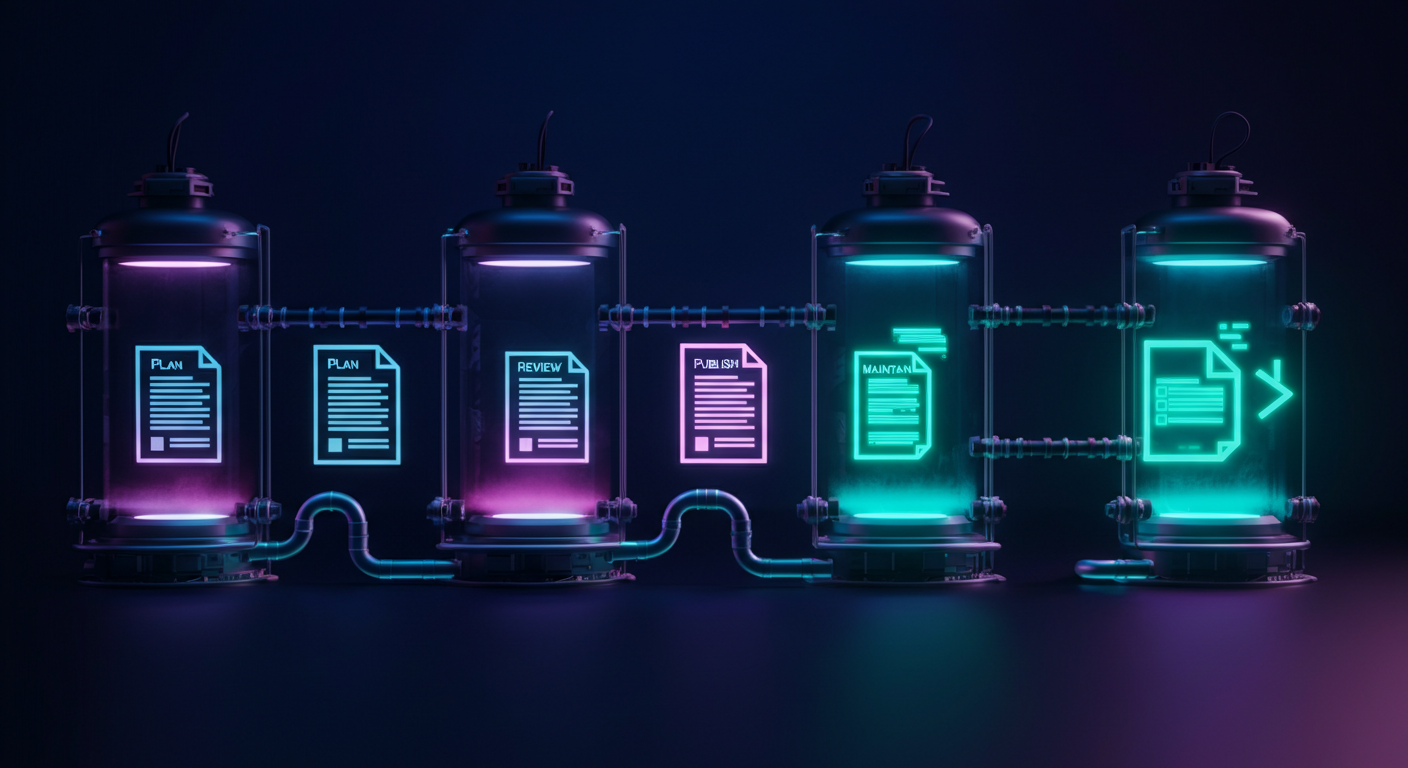
The Document Development Life Cycle (DDLC): shipping docs like software
Your code ships through a defined process. Your docs ship through vibes. The DDLC fixes that — five stages, clear owners, and gates that actually hold.

Developer portal vs. docs site: what's the difference and which do you need
Teams often build a docs site when they need a developer portal, or invest in a full portal when a docs site would do. Here is how to tell the difference and choose the right approach.

Custom domain for your docs (and why your customers notice)
Hosting your docs on yourdoc.something-platform.com is fine — until your customers reach the URL. Five reasons a custom domain is worth setting up, and a step-by-step for GitDoc.

How to bootstrap documentation from your PDFs and Office files
Half the documentation in most companies is trapped inside PDFs, Word files, and slide decks. Here is how to extract it into a real searchable docs site — without copy-pasting.

Best ReadTheDocs alternatives in 2026: 6 modern docs platforms
ReadTheDocs has hosted open-source documentation for a decade. Here are six modern alternatives — for OSS projects ready for a more contemporary stack.

Best ReadMe alternatives in 2026: 6 API docs platforms compared
ReadMe is the gold standard for API hubs — but the pricing and editor flow do not work for every team. Six alternatives, honestly compared.

Best Notion alternatives for technical docs in 2026
Notion is a great workspace tool, but a poor public documentation platform. Six alternatives for teams that have outgrown using Notion as docs.

Best Mintlify alternatives in 2026: 7 docs platforms worth considering
Mintlify set the bar for modern AI-native docs, but it is not the right fit for every team. Seven alternatives — open-source and hosted, AI-first and writer-first — compared honestly.

Best GitBook alternatives in 2026: 7 docs platforms to consider
GitBook is a strong writer-first docs tool, but engineering-led teams often outgrow it. Seven alternatives — from AI-native to self-hosted — compared honestly.

Best Docusaurus alternatives in 2026: when self-hosting docs stops being worth it
Docusaurus is excellent — until the upkeep starts eating your engineering time. Six alternatives for teams ready to graduate from a self-hosted React app.

Best Document360 alternatives in 2026: 6 knowledge base platforms
Document360 is a strong knowledge base for support teams. Six alternatives for teams that want more flexibility, lower pricing, or developer-first features.

Best documentation platforms for SaaS teams in 2026
A SaaS docs platform has to handle public marketing-aligned docs, API references, customer KB, and internal team handbooks. Six platforms ranked for that specific job.

Best DeepDocs alternatives in 2026: auto-sync docs platforms compared
DeepDocs popularised the auto-sync angle for AI-powered documentation. Six alternatives that take the same idea further — or in slightly different directions.

Best Confluence alternatives for engineering teams in 2026
Confluence works for the wiki use case, but it is a poor home for developer documentation. Six alternatives — modern, AI-native, and built for engineering teams.

Best AI-powered documentation platforms in 2026
AI in documentation has moved well past autocomplete. Six platforms that have rebuilt the docs workflow around AI — from generation to MCP-native consumption.
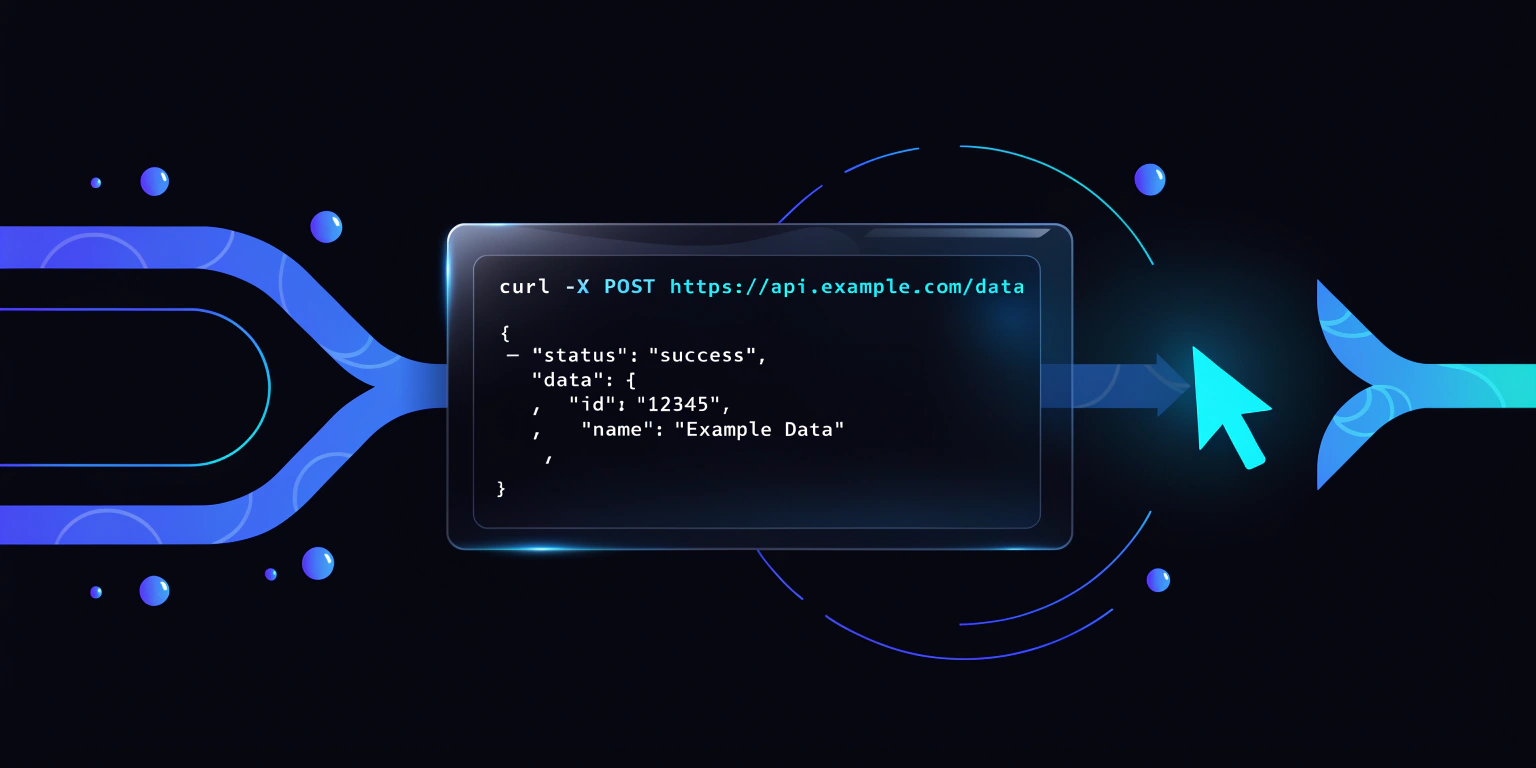
How to write API documentation developers actually read
Most API docs fail not for lack of information but because they ignore how developers really use docs. A practical framework from watching hundreds of integrations.

How to use AI to write your first documentation draft (and what to fix after)
AI solves the blank page problem in documentation. Here's the prompt framework and 5-pass editing checklist to turn AI drafts into accurate, useful docs.

AI documentation trends 2026: what changed and what's coming
AI agents now account for nearly half of all documentation traffic. Here are the five trends reshaping docs in 2026 and what they mean for your team.

5 mistakes that are quietly killing your product documentation
Your docs aren't driving signups, your team keeps answering the same support tickets, and nobody knows where things live. Here are the five root causes — and the fixes.